The succes of Owl for peace
Our initiative pursues several interconnected goals:
-
Promote environmentally friendly agriculture
-
Educate the public—especially children—about the importance of nature conservation
-
Foster scientific research and knowledge
-
Encourage people-to-people interactions across borders, including in conflict-affected regions
-
Build bridges between society and political leadership
-
Maintain a strong media presence to spread the message of Owls for Peace
These successes described below go beyond individual efforts. Our ambition is to replicate this approach on a global scale and extend it to diverse biological system, well beyond the barn owl.
Favour environmentally friendly agriculture
The initiative using barn owls to connect Israelis, Palestinians, and Jordanians was designed to reduce the regional use of rodenticides. The project raised awareness of the harmful effect of chemical rodent control, highlighting that the use of poison is problematic from both health and conservation perspectives. Over a 30-year monitoring period in Israel, rodenticide use by farmers strongly declined. While we do not claim that this reduction is solely attributable to our initiative, it played an instrumental role by promoting sustainable, nature-based pest control solutions. We replicated this approach in multiple countries such as Cyprus and Greece.
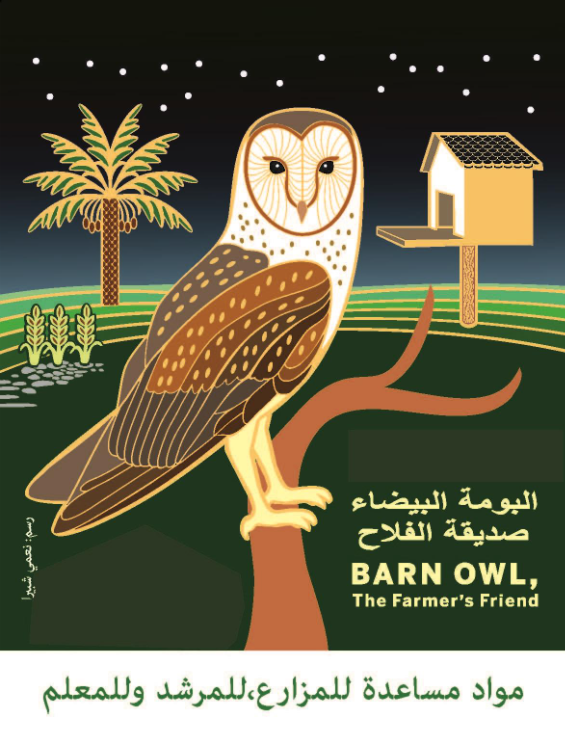
A poster in Arabic to inform farmers about the importance of the barn owl to control rodents instead of spreading rodenticides.
Educate the public—especially children—about the importance of nature conservation
Raising awareness about the importance of barn owls—and nature more broadly—has been at the core of our educational activities across multiple countries, including Greece, Israel, Jordan, the Palestinian Authority, Switzerland, and Ukraine. We have developed a wide range of educational materials, such as booklets, documentaries, puppet shows, pellet analysis workshops, art activities, and guided nest visits. These tools support outreach in schools and on farms, making conservation tangible and engaging for diverse audiences. Through continuous engagement with local communities, we foster greater awareness of bird protection and promote a lasting culture of nature conservation.
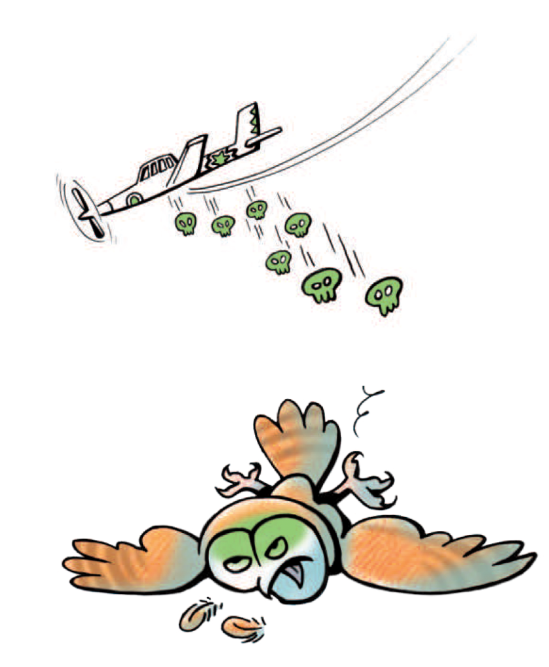
A drawing representing the danger of using rodenticides to combat rodents. © Alexis Nouailhat
Foster scientific research and knowledge
Science lies at the heart of our initiative. Promoting a species requires not only a deep understanding of the animal itself, but also of the ecosystems in which it lives. Beyond this, our work must be carefully documented, and the resulting knowledge made accessible to a broad audience. Scientific research provides the credibility needed to advocate for the use of barn owls as a sustainable alternative for farmers. To date, we have published dozens of peer-reviewed papers on key topics such as population monitoring, pellet analysis, conservation strategies, and activities directly linked to the Owls for Peace initiative.
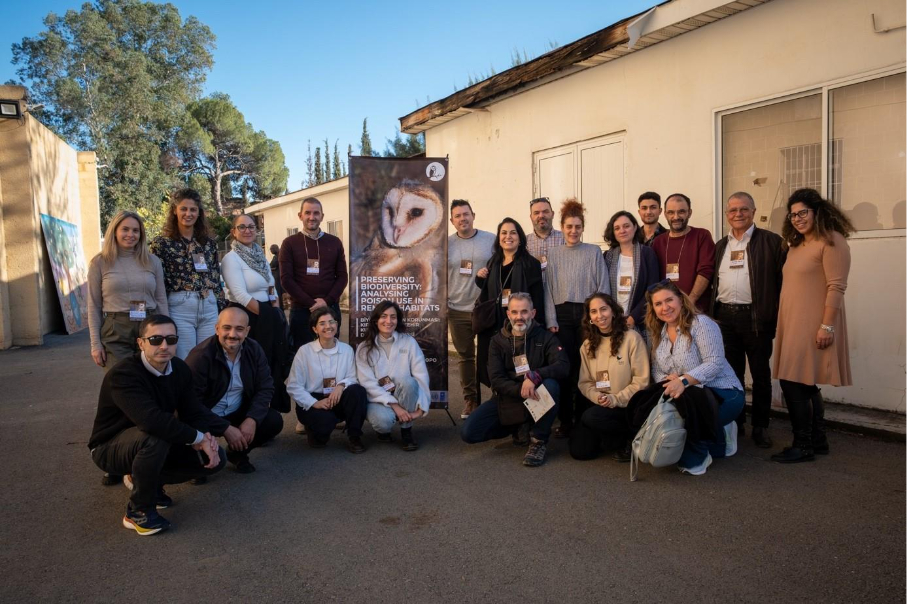
Scientific congress in the UN buffer zone in Nicosia, with delegations from Southern and Northern Cyprus, as well as representatives of Greece (Prof. Vasileios Bontzorlos). December 2025.
Encourage people-to-people interactions across borders, including in conflict-affected regions
We actively foster people-to-people interactions by bringing together ornithologists from diverse countries and background, including Jewish and Muslim communities. We also invite farmers from different regions and nations to share their experiences using barn owls as a biological pest control solution. Our workshops create opportunities for farmers and local leaders to engage with representatives from participating countries, encouraging dialogue, mutual learning, and trust-building. Expanding the number of countries involved in the Owls for Peace initiative is therefore a key priority. By 2025, 13 countries joined our initiative.
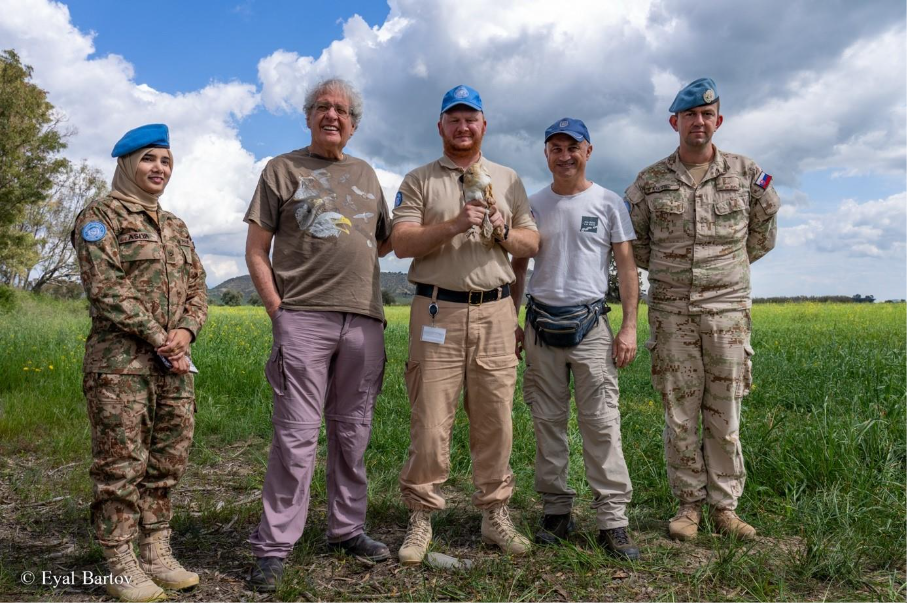
Prof Yossi Leshem and Prof Alexandre Roulin with three UN soldiers in the buffer zone in Cyprus.
Build bridges between society and political leadership
To achieve meaningful impact, the Owls for Peace initiative relies on two complementary approaches. First, we adopt a bottom-up, field-based strategy by promoting and supporting the installation of barn owl nest boxes. This has been implemented in several countries, most recently in Greece, Morocco, and Cyprus, directly engaging local communities and farmers. Second, we pursue a top-down approach by maintaining close contact with politic and diplomatic stakeholders. This engagement is essential to ensure that Owls for Peace is recognized and embraced at the highest decision-making levels, with the long-term goal of integrating barn owl-based biological pest control into national agricultural strategies.
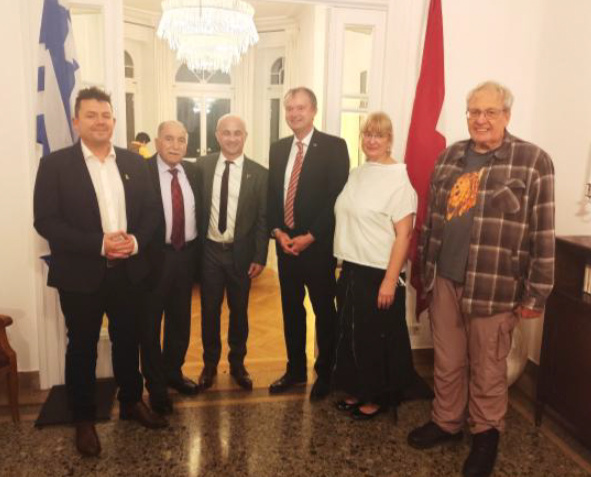
Prof Vasileios Bontzorlos (Greece), General Mansour Abu Rashid (Jordan), Prof Alexandre Roulin (Switzerland), his Excellency Ambassador Stefan Estermann and his wife, and Prof Yossi Leshem (Israel) at the Swiss embassy in Athen. January 2025.
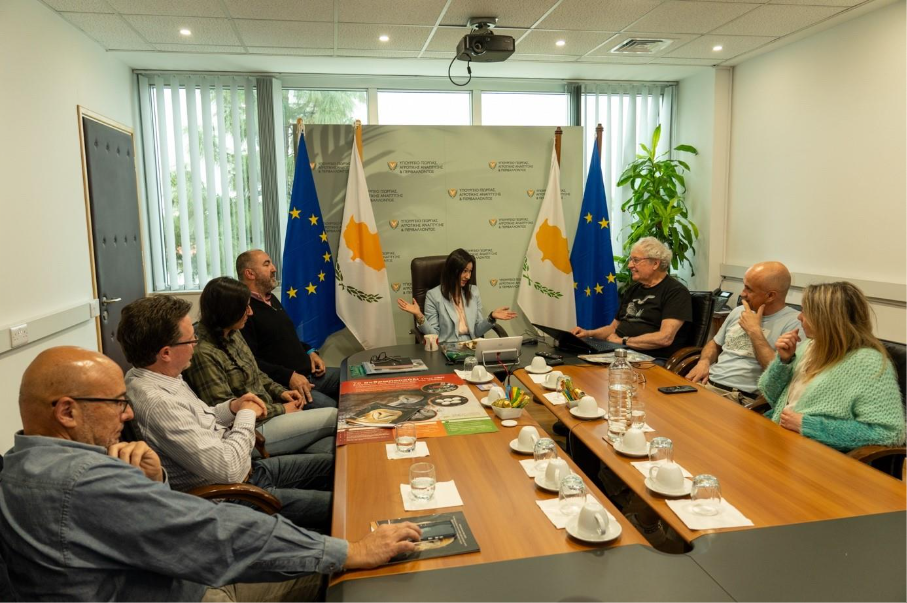
Prof Yossi Leshem, Prof Alexandre Roulin and colleagues from Cyprus (Nikos Kassini, Martin Hellicar, Antaia Christou, and Melpo Apostolidou) with the Cyprus minister of Agriculture, Maria Panayiotou. Nicosia, June 2024.
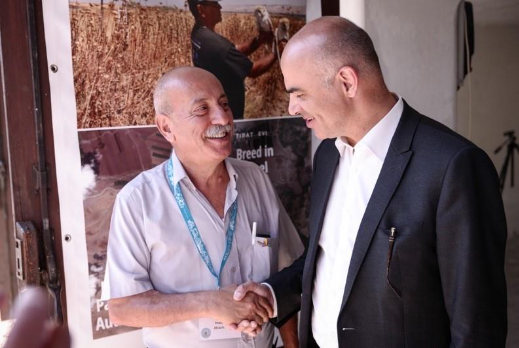
A Palestinian ornithologist with the President of Switzerland, Alain Berset. June 2018.
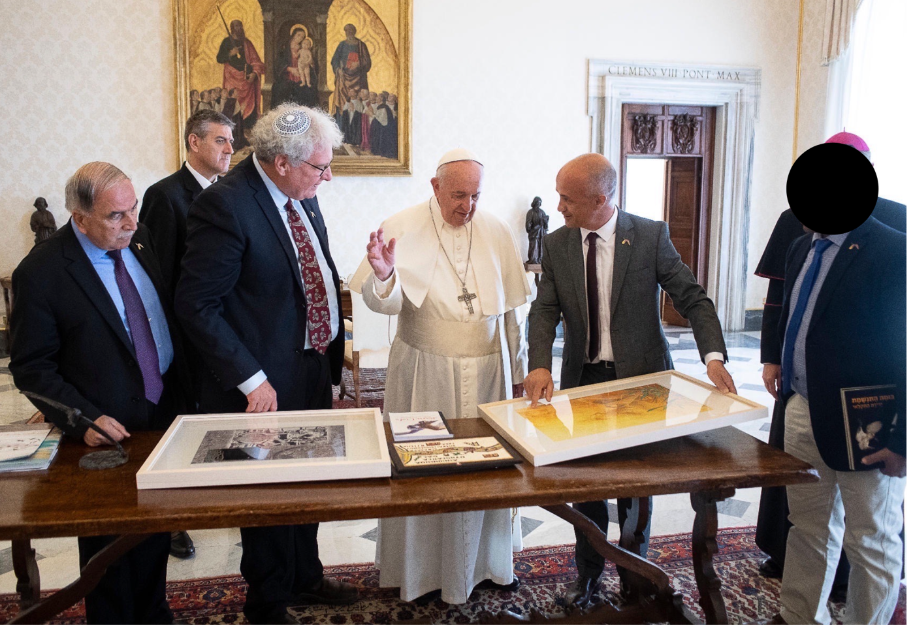
General Mansour Abu Rashid (Jordan), Prof Yossi Leshem (Israel), the Pope Francis, Prof Alexandre Roulin (Switzerland) and a Palestinian ornithologist. Vatican, Mai 2019.
Maintain a strong media presence to spread the message of Owls for Peace
We are regularly featured in the media across all countries where the initiative is active, through television programmes, newspapers articles, and other press coverage. Media engagement is an integral part of our strategy, and we proactively seek visibility whenever we organise workshops or reach significant milestones, such as our visit to Ukraine, and the UN-controlled buffer zone in Cyprus with delegations from both southern (Greek) and northern (Turkey) Cyprus. As a result of this sustained presence, the public increasingly associate barn owls with the Owls for Peace initiative, reinforcing the project’s identity and amplifying its message of conservation, cooperation, and peace.
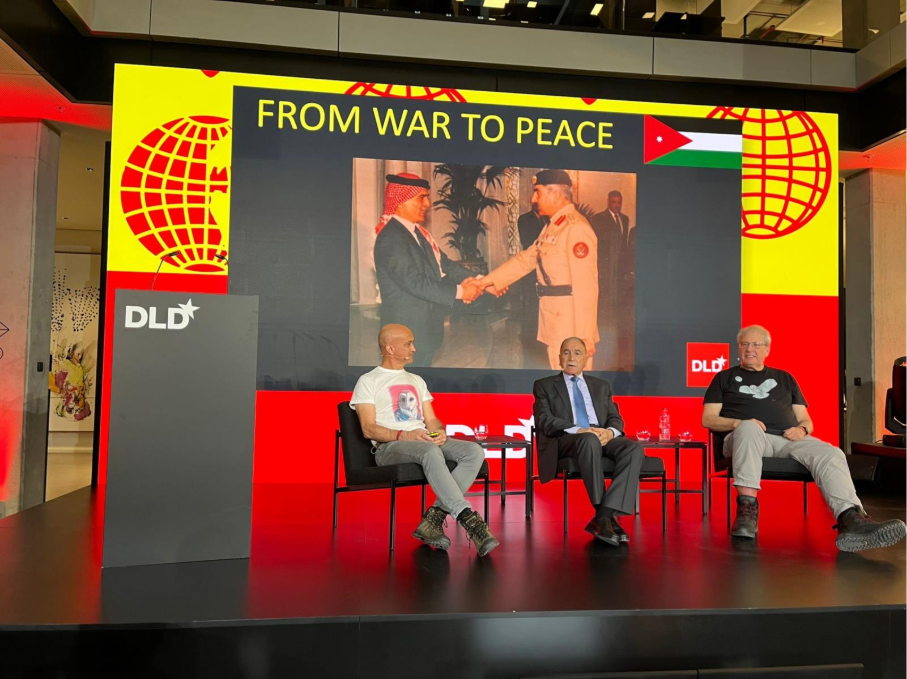
Prof Alexandre Roulin, General Mansour Abu Rashid and Prof Yossi Leshem giving a lecture at a congress about innovation in Munich. January 2025.
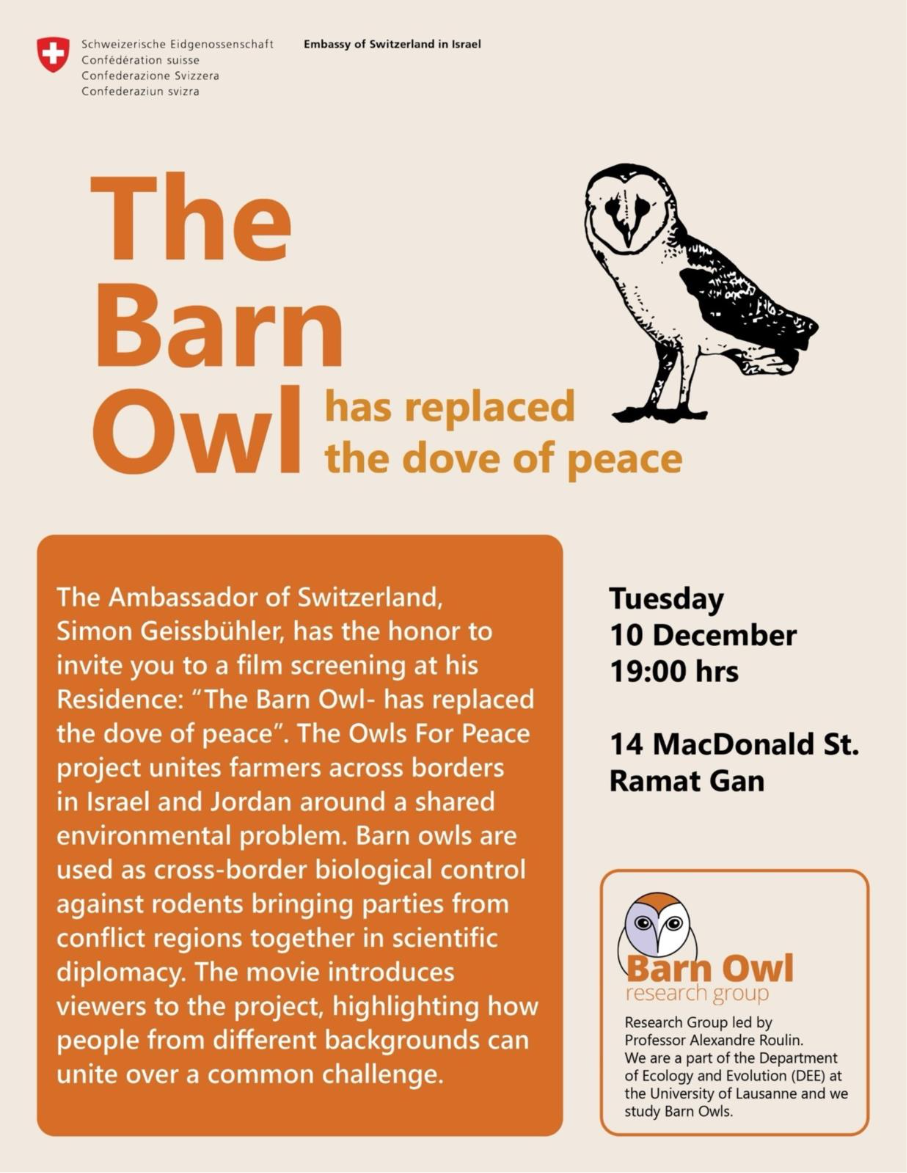
Event organized at the Swiss embassy at Tel Aviv in December 2024.